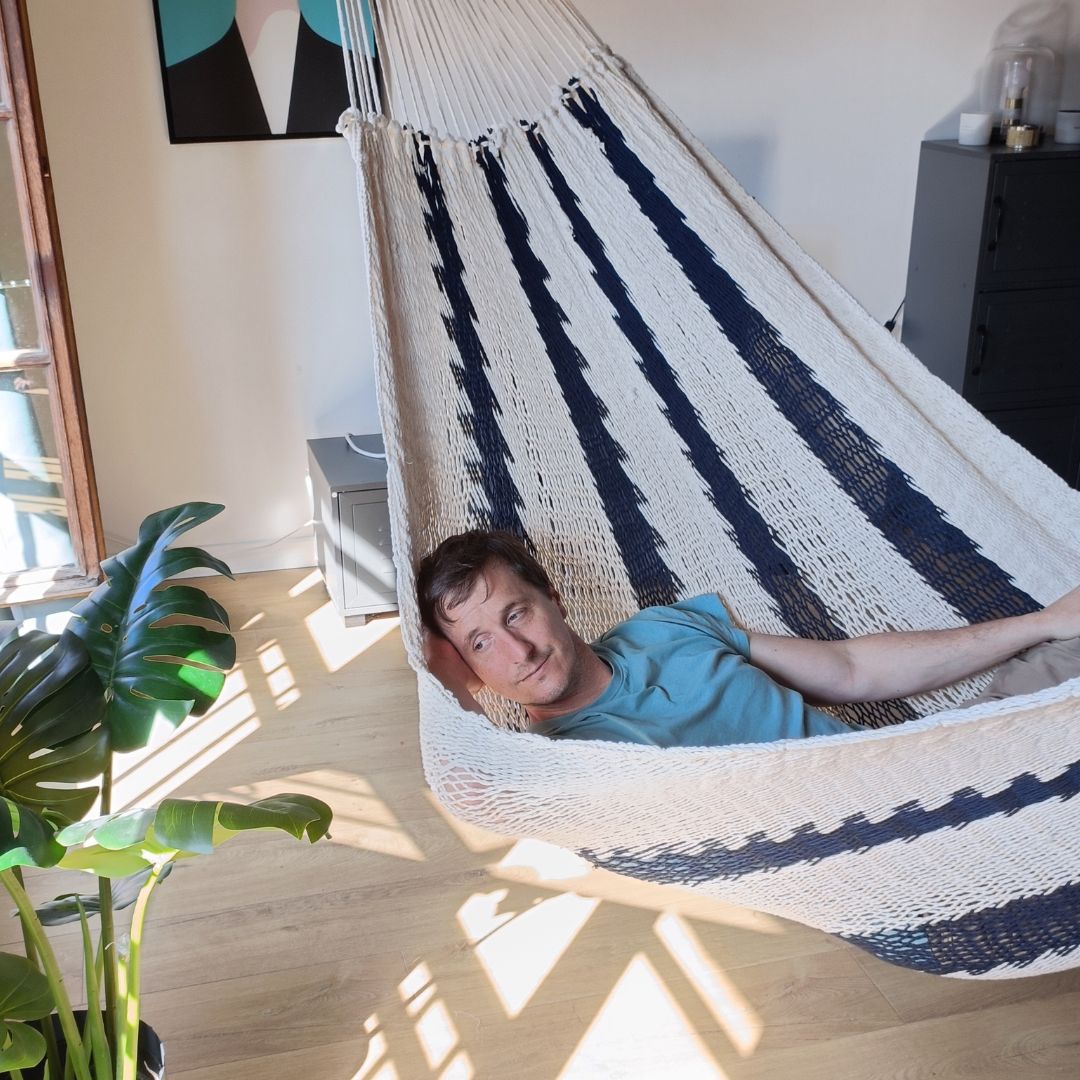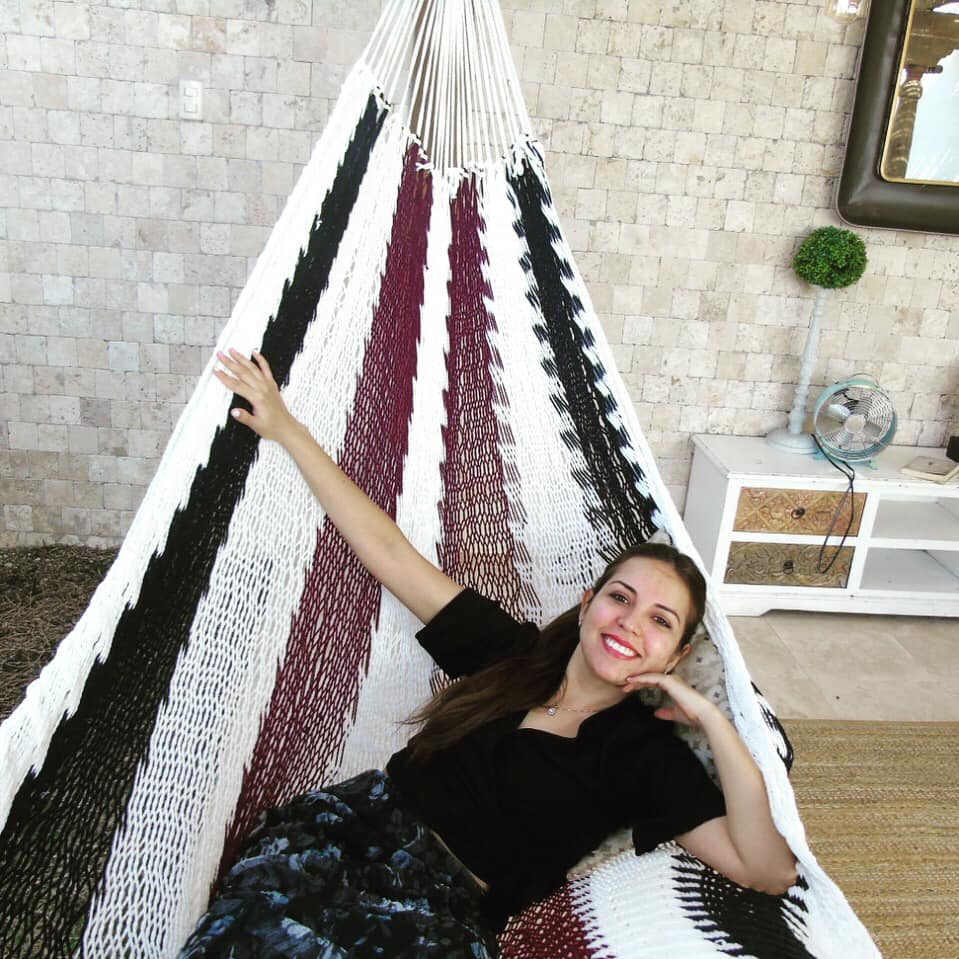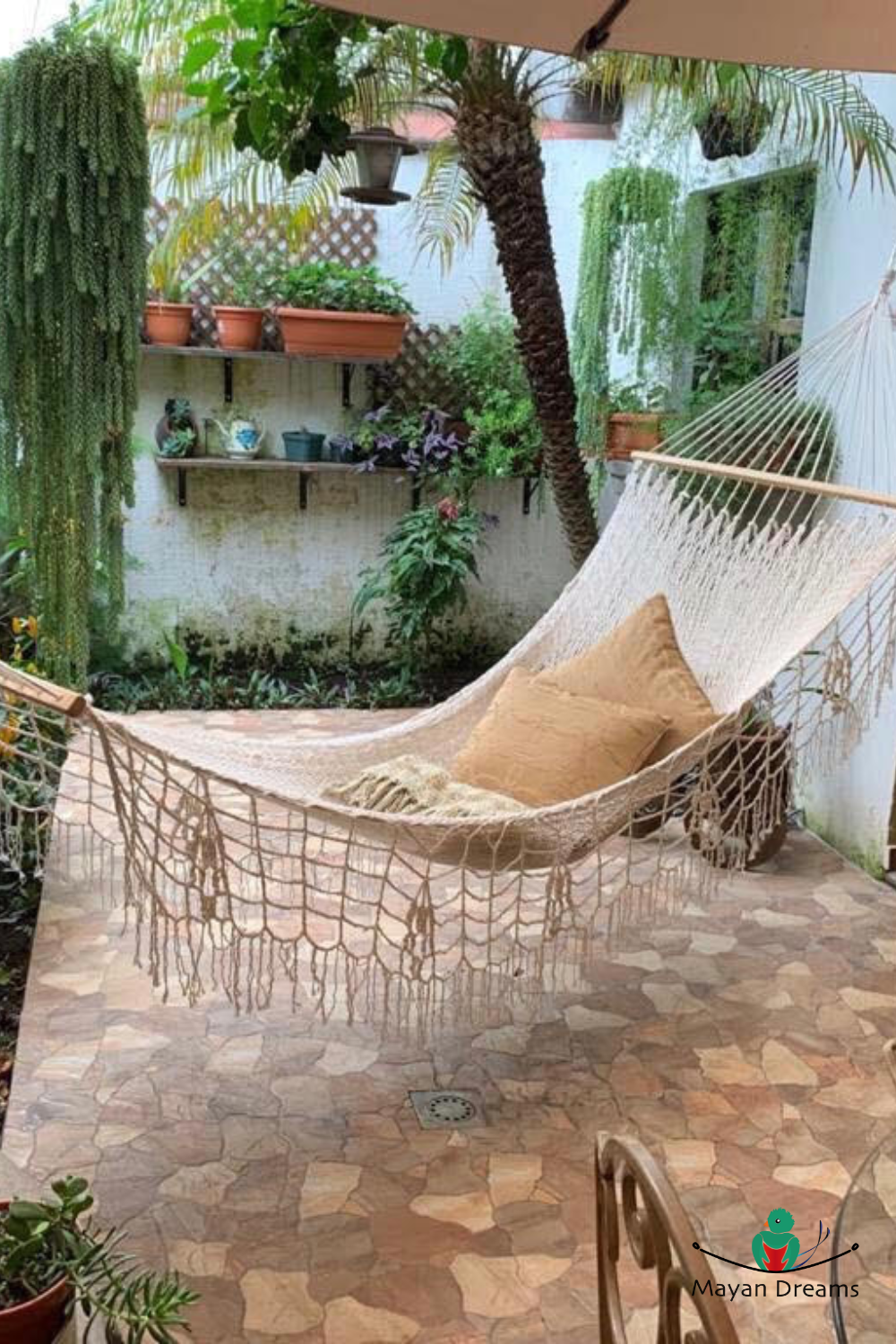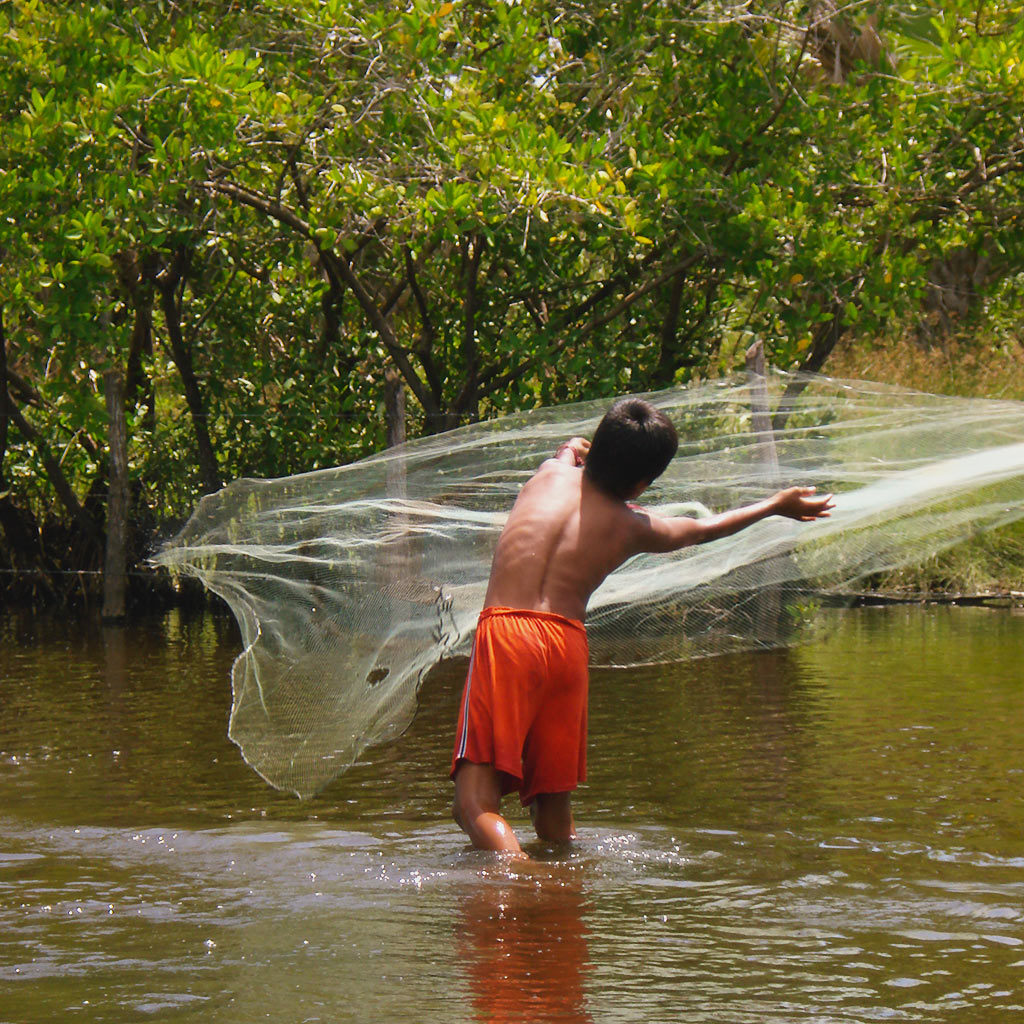
In the volcanic highlands of Guatemala, a few craftsmen of the village of Nahualá have perpetuated a unique textile craft for generations: weaving Mayan fabric for hammocks. Here, each hammock is the result of slow, precise and deeply human work, where gesture, rhythm and material are inseparable.
This traditional weaving technique produces hammocks that are extremely soft, durable and enveloping, designed to cradle the body as it rests — just as they have always done in Mayan culture.
Nahualá: living craftsmanship from the volcanic highlands
In Nahualá, wooden looms are part of everyday life. Passed down within families, this ancestral craft has developed in a challenging context, marked by the village’s history, past conflicts, and the exile of many artisans to the United States.
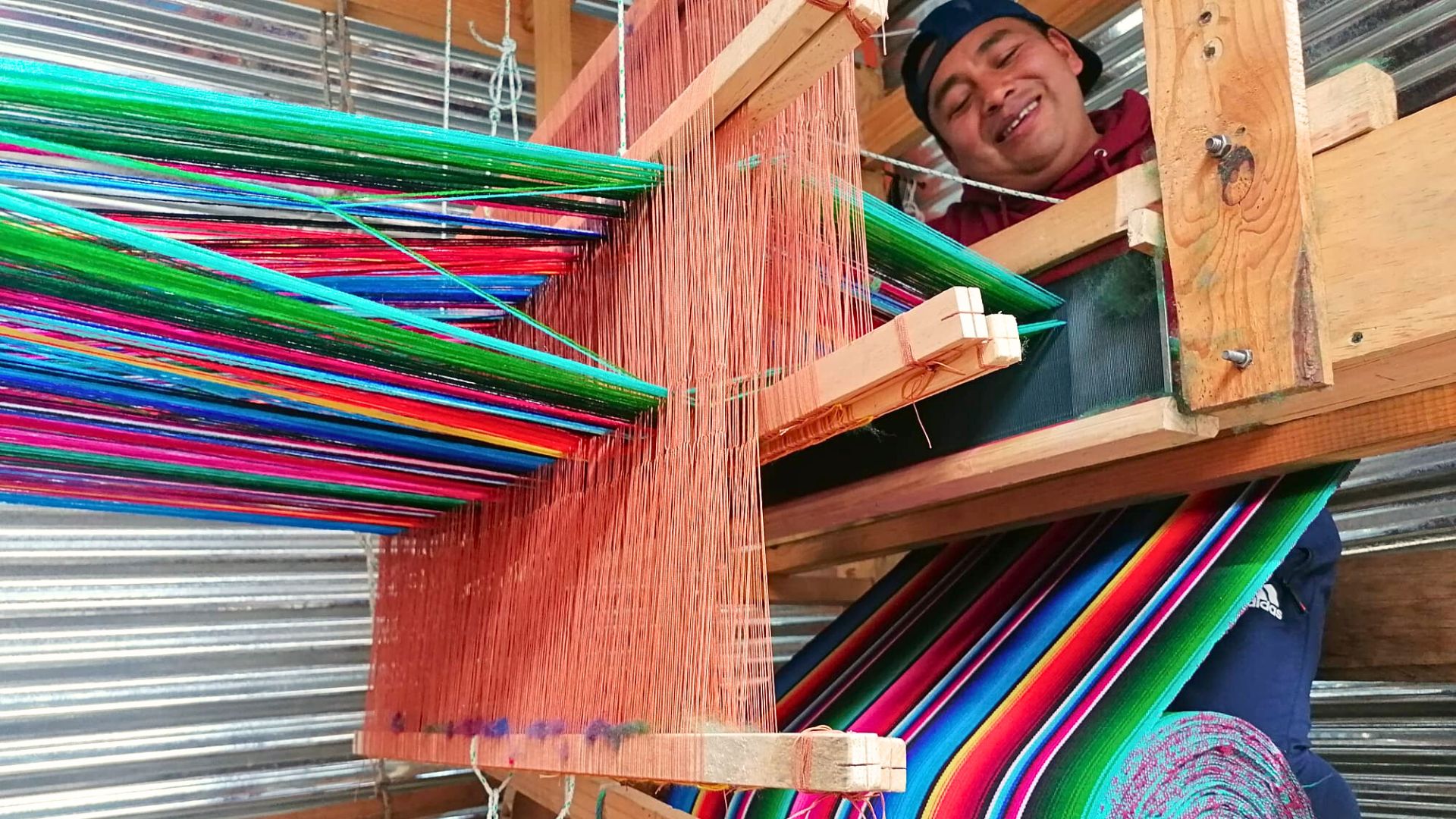
Despite this, some families continue to preserve these traditional techniques, convinced that weaving is not just a craft, but a cultural identity.
Preparing the thread: colours, patience and ingenuity
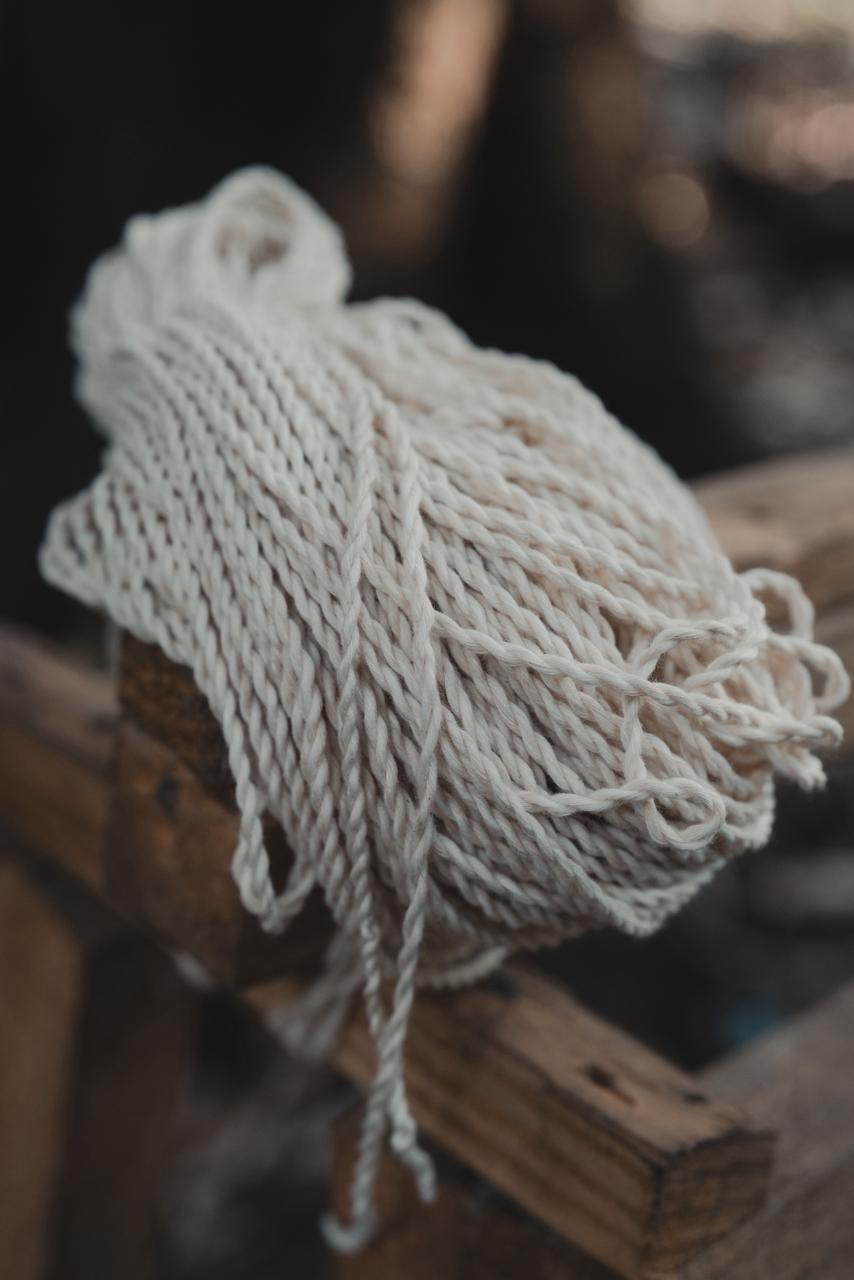
Even before weaving begins, a long and meticulous process gets underway: preparing the cotton thread.
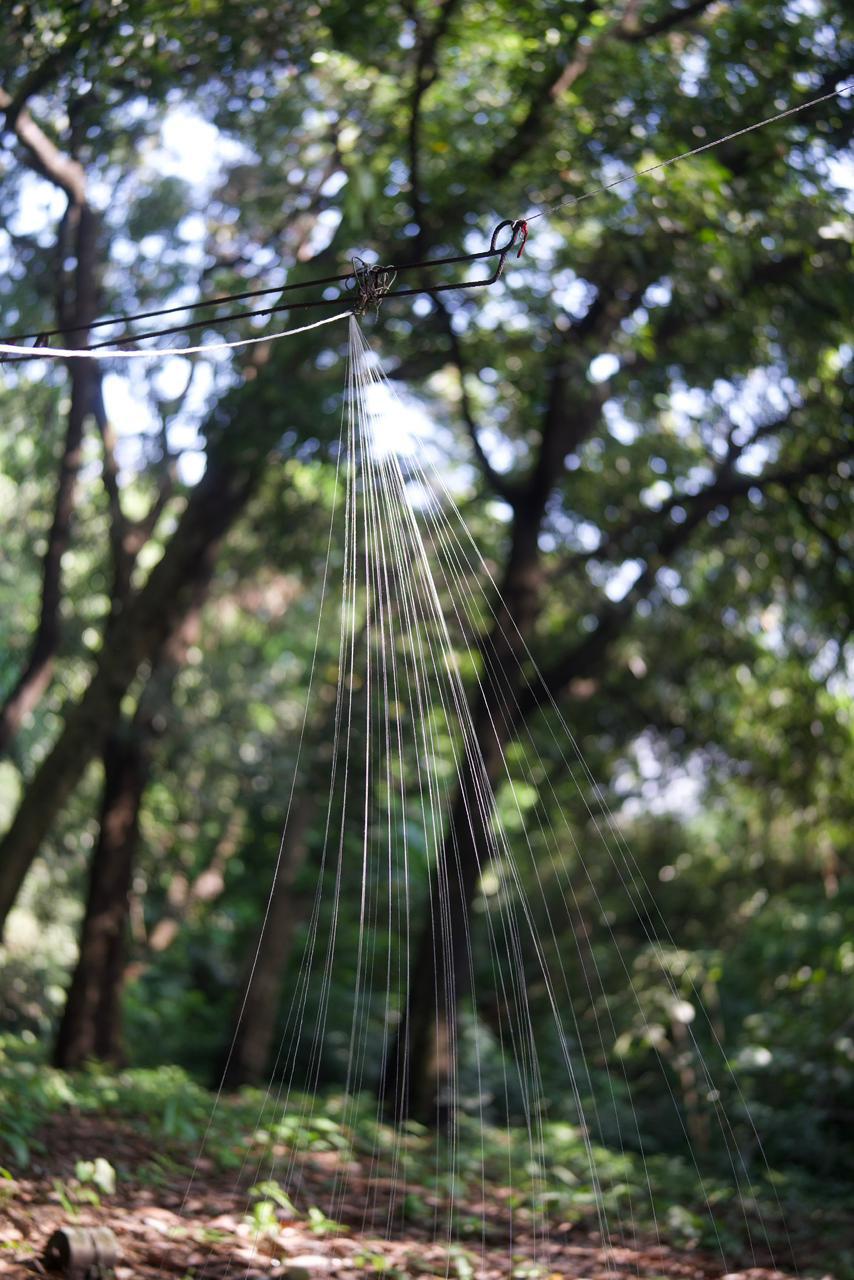
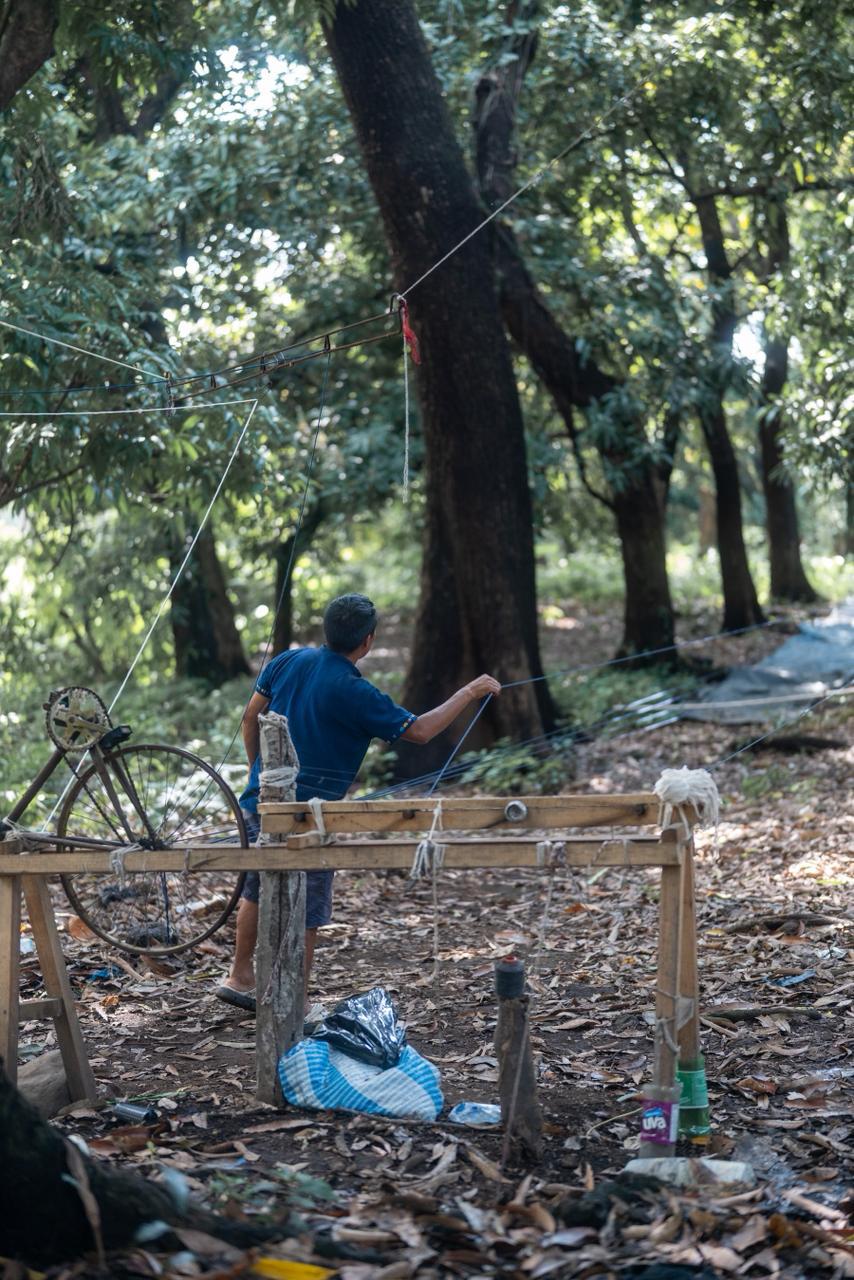
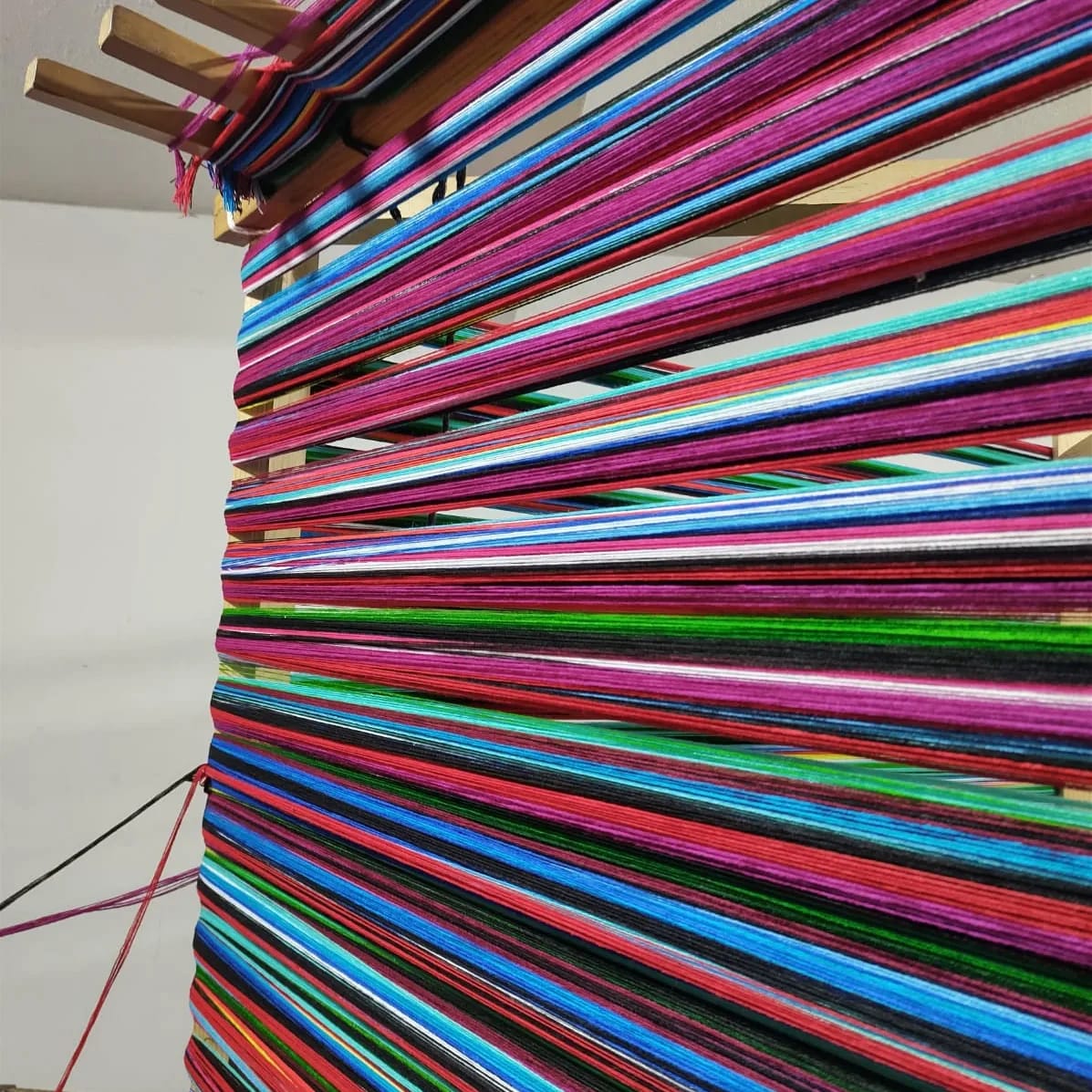
The threads are first sorted by colour, then wound around large wooden structures rotating on a vertical axis, in a manner similar to those traditionally used in other parts of the world, such as Central Europe. This step allows the characteristic patterns and colour bands of Mayan hammocks to be created.
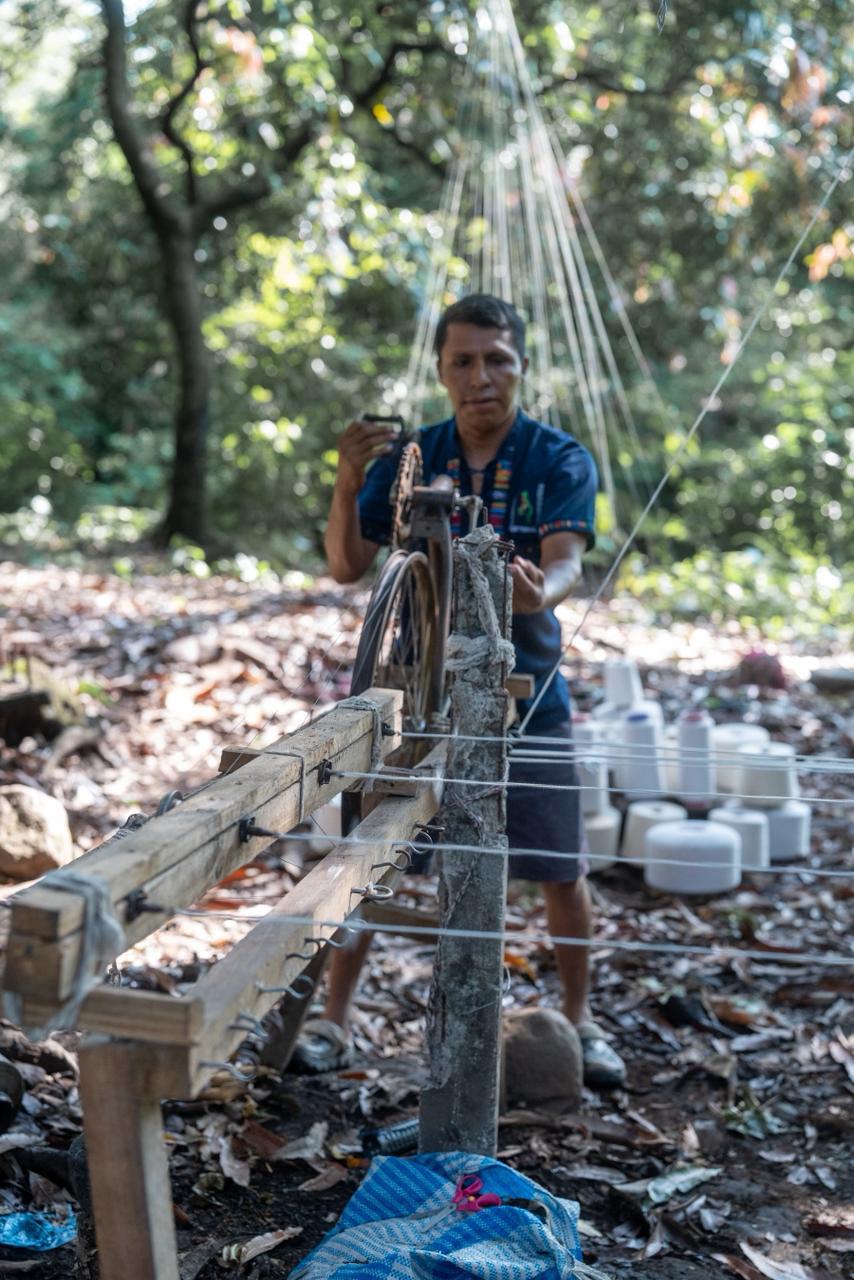
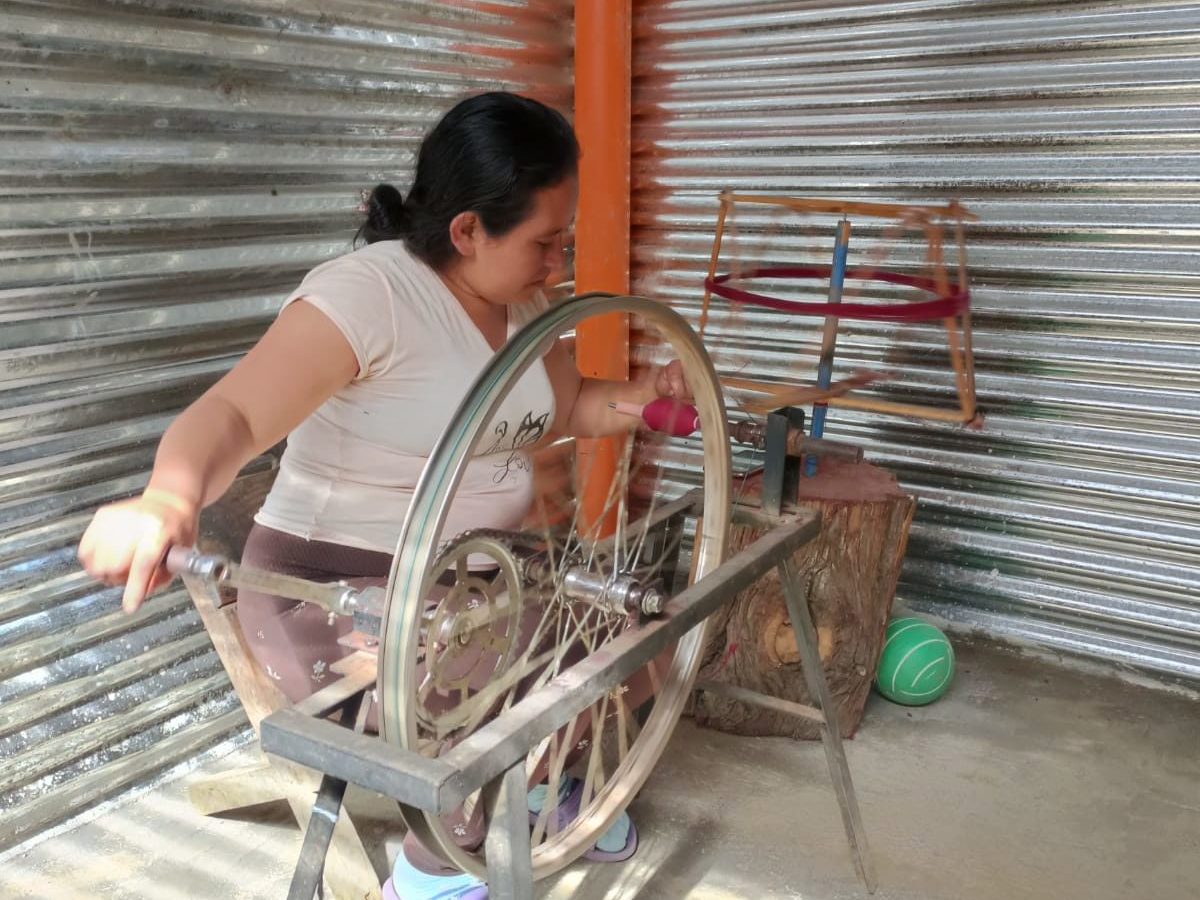
To prepare the warp, the thread is then wound using a hand-crafted spinning wheel powered by a bicycle wheel, often manual or pedal-operated. This ingenious machine, entirely mechanical and without electricity, produces a regular thread while maintaining a gentle and controlled working rhythm.
It is a fine example of artisanal innovation, born out of necessity and experience.
Weaving on a wooden loom: work for the body and hands
The Maya fabric hammock is woven on a traditional wooden loom, using both the artisan’s hands and feet.
The wooden shuttle, loaded with the weft yarn, is passed manually between the warp threads. Each pass is pressed down precisely to ensure even density and high strength of the fabric.
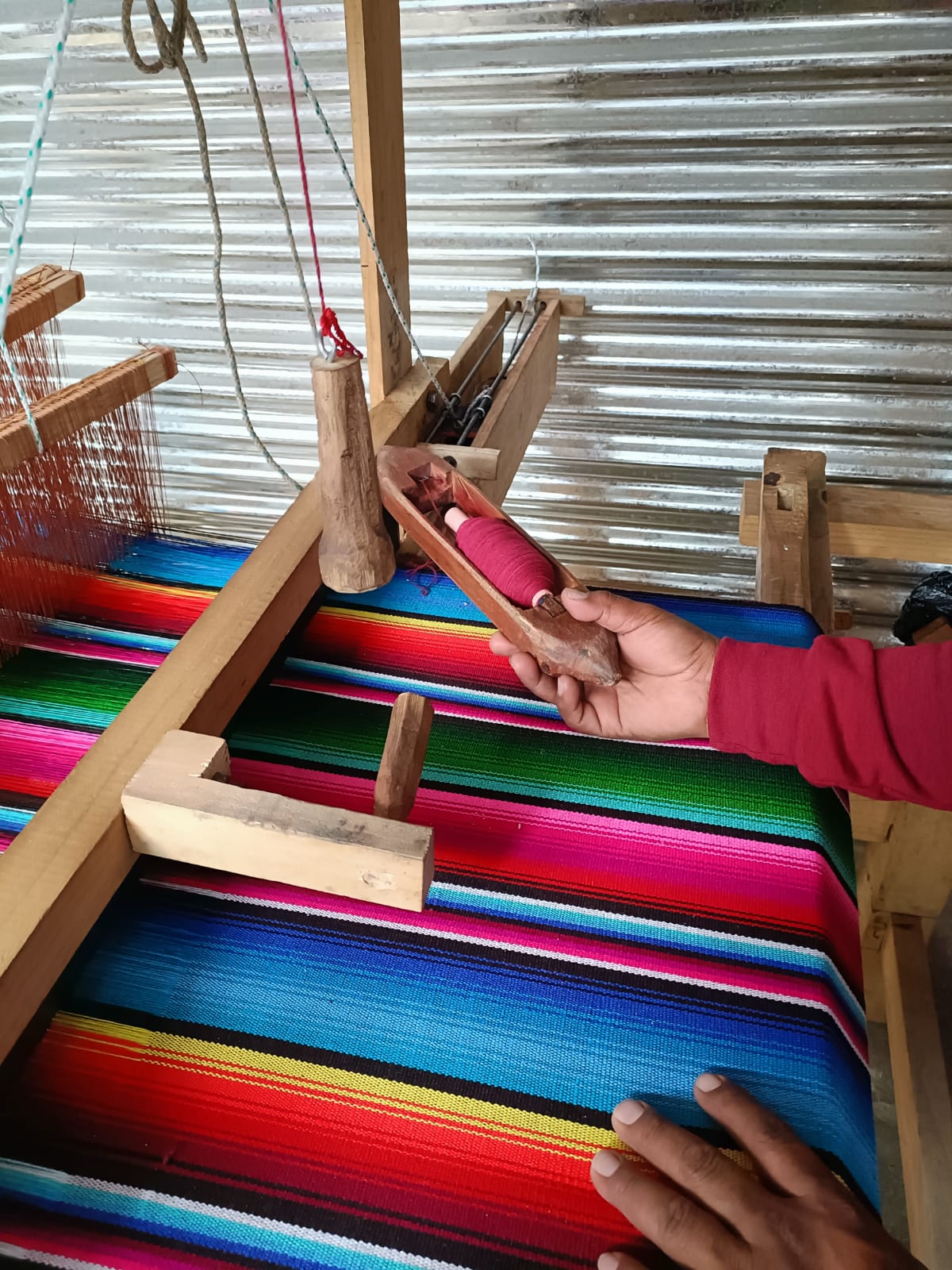
This work requires concentration, coordination and endurance. The entire body participates in the weaving, in a repetitive and fluid movement, almost meditative.
Assembly and stitching: a collective effort
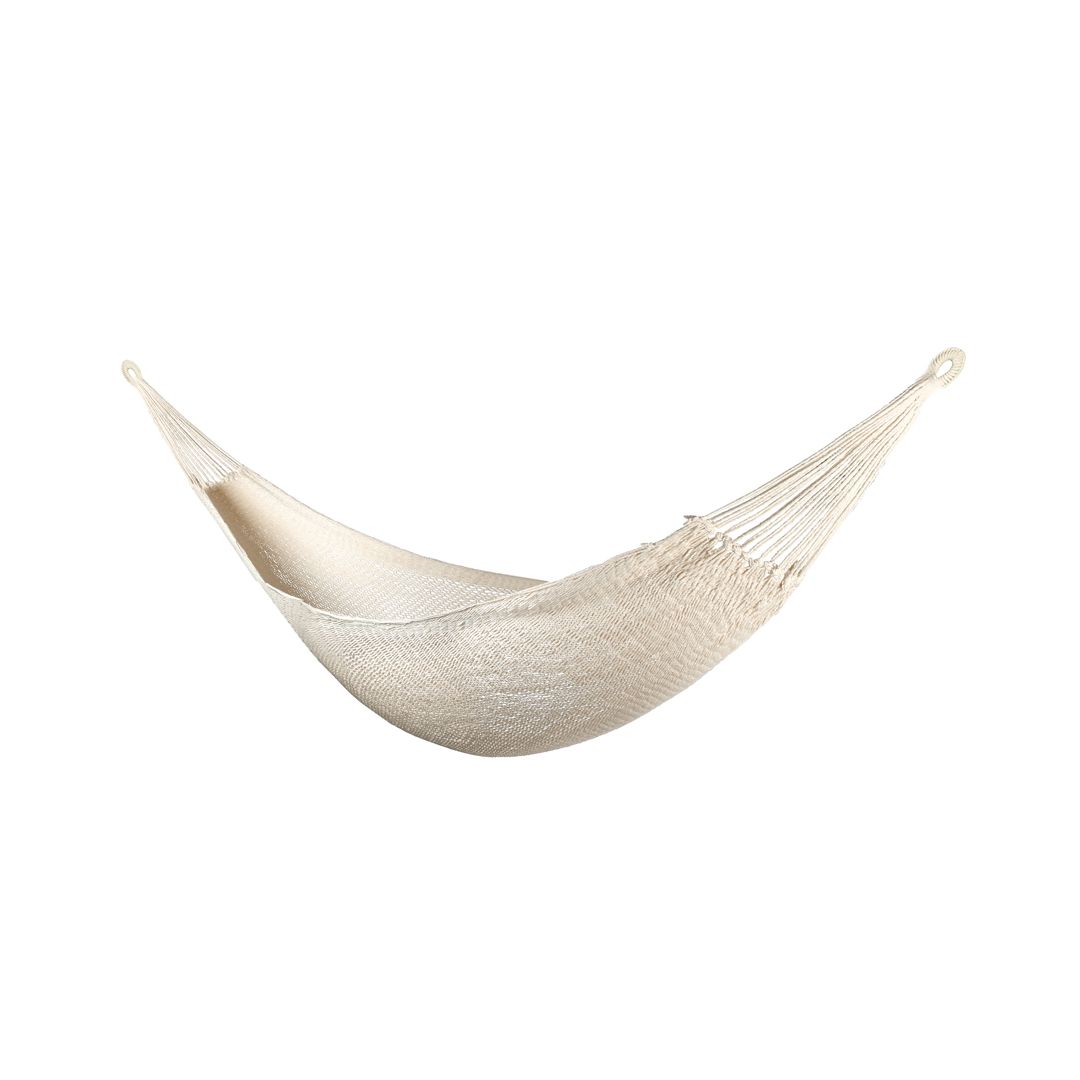
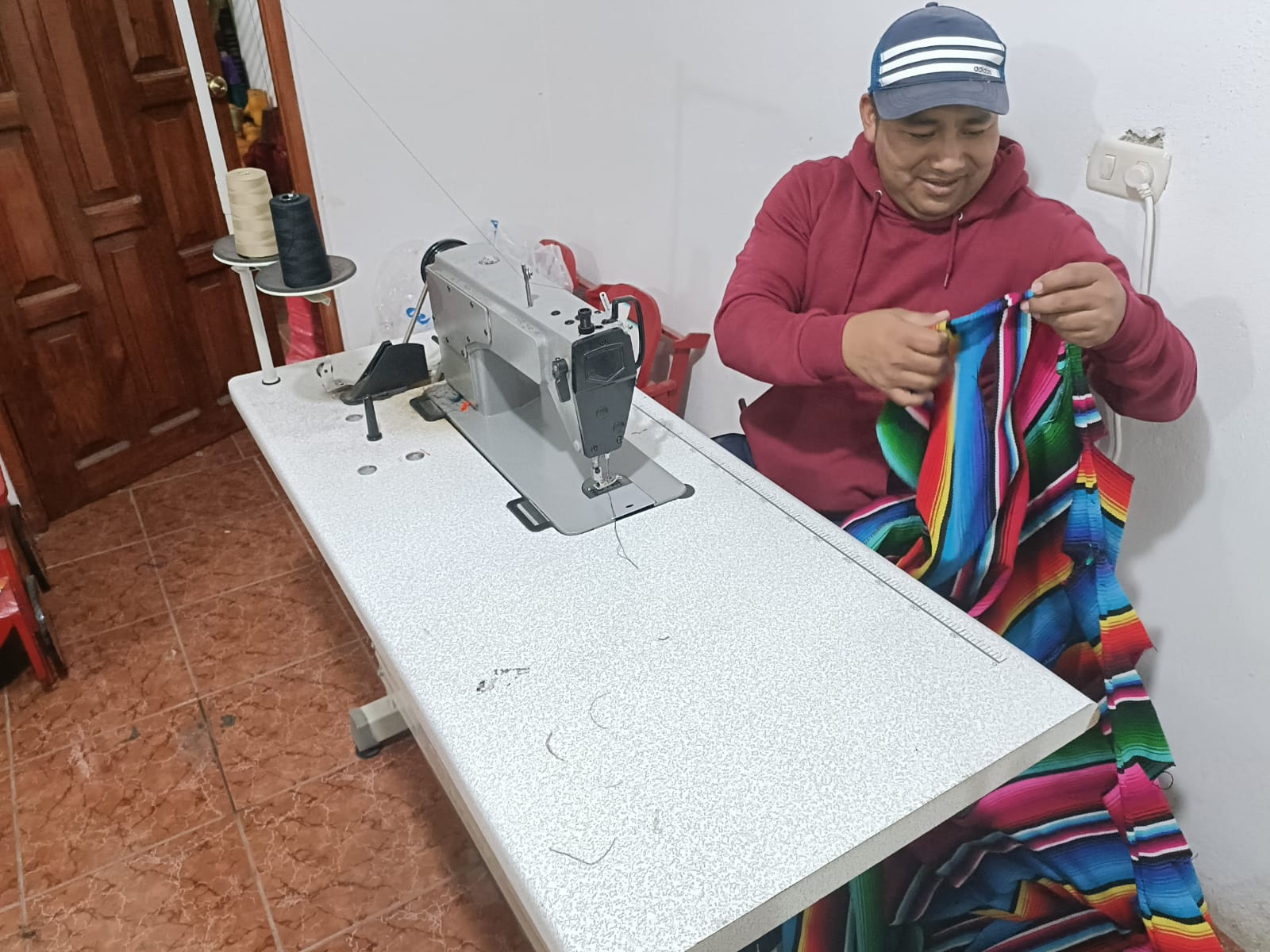
As the width of the fabric is determined by the loom, the final hammock is made up of several strips of fabric, carefully sewn together by hand or machine.
These seams often form a discreet arrowhead pattern, which is characteristic of this type of hammock. Traditionally, the needle and thread work involved in sewing is carried out by women, illustrating the collective and complementary nature of this indigenous craft.
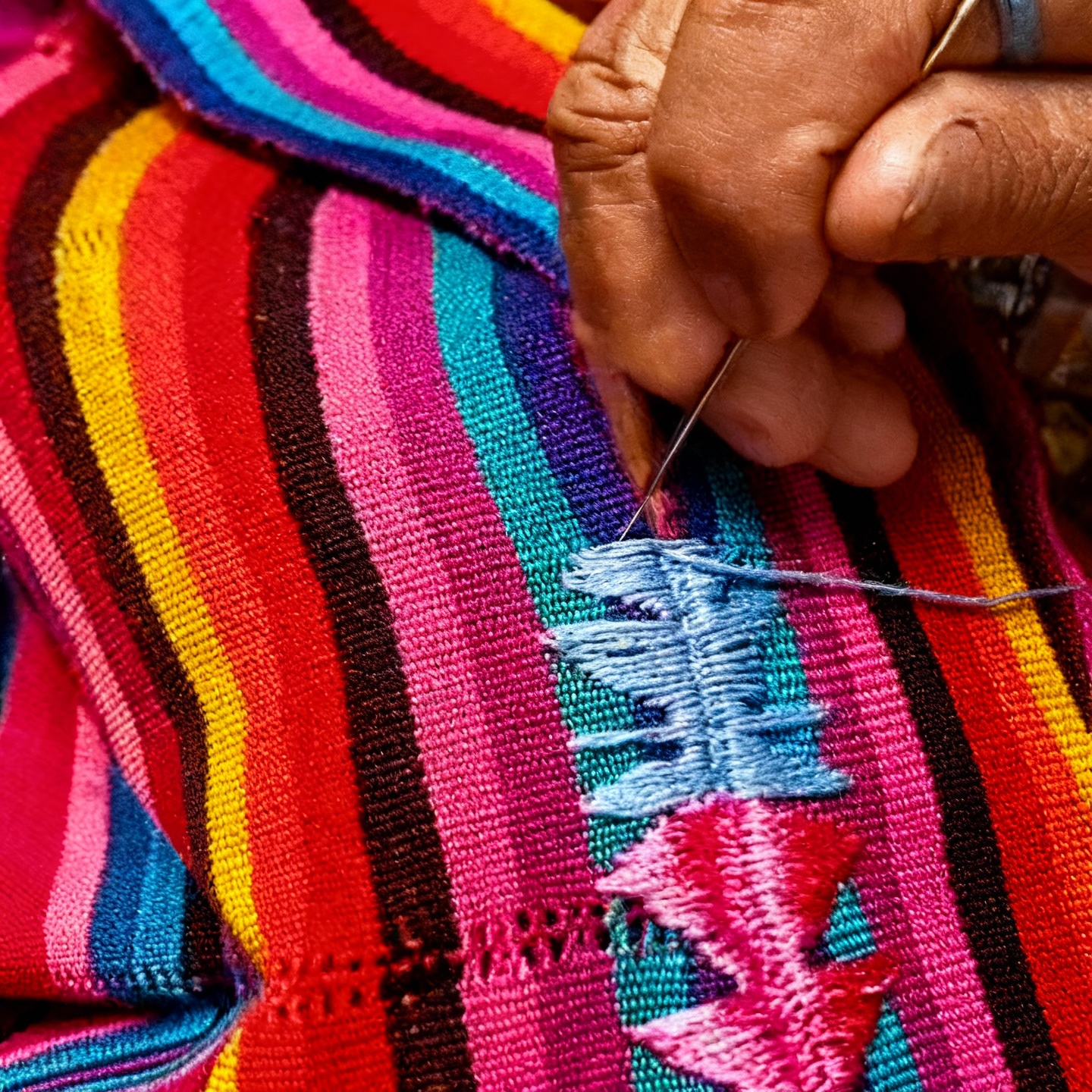
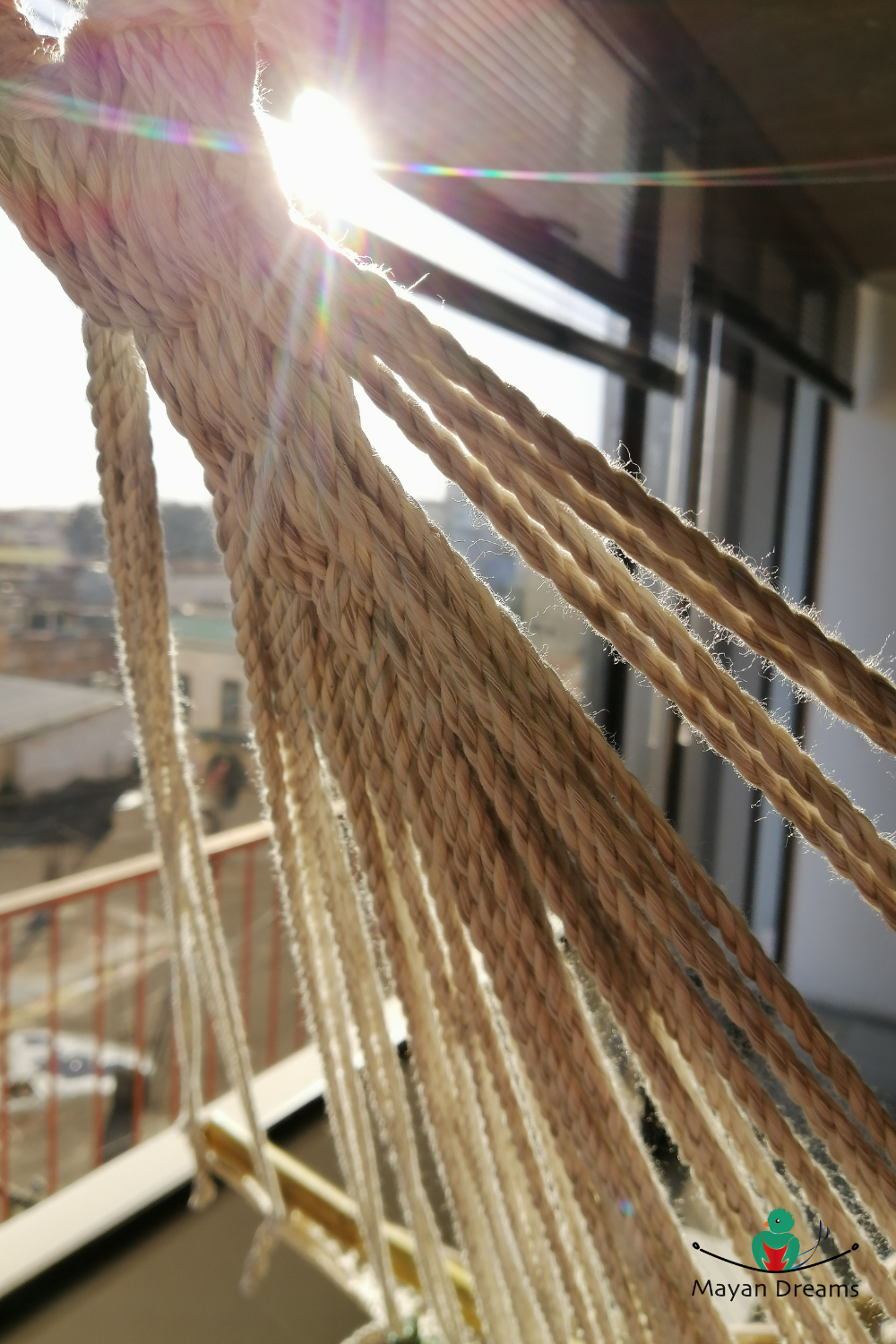
The edges are then reinforced to prevent fraying, and the ends are prepared for attaching the hanging cords, which are also hand-knotted from cotton.
Comfort that naturally adapts to the body
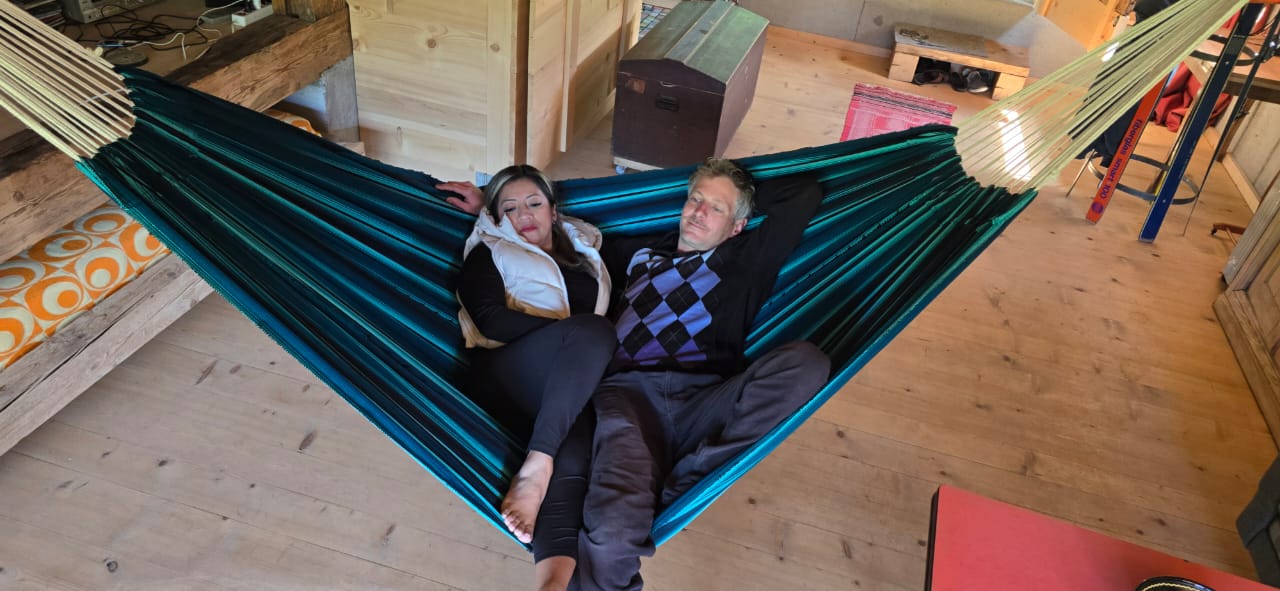
Thanks to this dense and flexible weaving technique, the Maya fabric hammock naturally moulds to the shape of the body. It distributes weight evenly, without pressure points, offering ideal comfort for relaxation, napping or sleeping.
It is no coincidence that these hammocks have been used daily in Guatemala for centuries.
A tradition that is fragile, but alive
Nahualá’s history has been marked by difficult periods, including conflicts between villages and high emigration. Many artisans have left the region to seek work in the United States, jeopardising the transmission of these skills.
Today, traditional weaving faces a double challenge: competition from cheap industrial products and the gradual disappearance of artisans. However, those who remain continue to perpetuate these techniques with pride, convinced of their cultural and human value.
Sharing these gestures, images and stories is also a way of contributing to the preservation of this living heritage.
Our commitment at Mayan Dreams
At Mayan Dreams, we work directly with artisans in Nahualá, without any middlemen. We support their work by offering fair pay, advances on raw materials, and practical assistance with production.
Each hammock is then carefully checked and finished to ensure lasting quality, faithful to the original craftsmanship and suited to contemporary use.